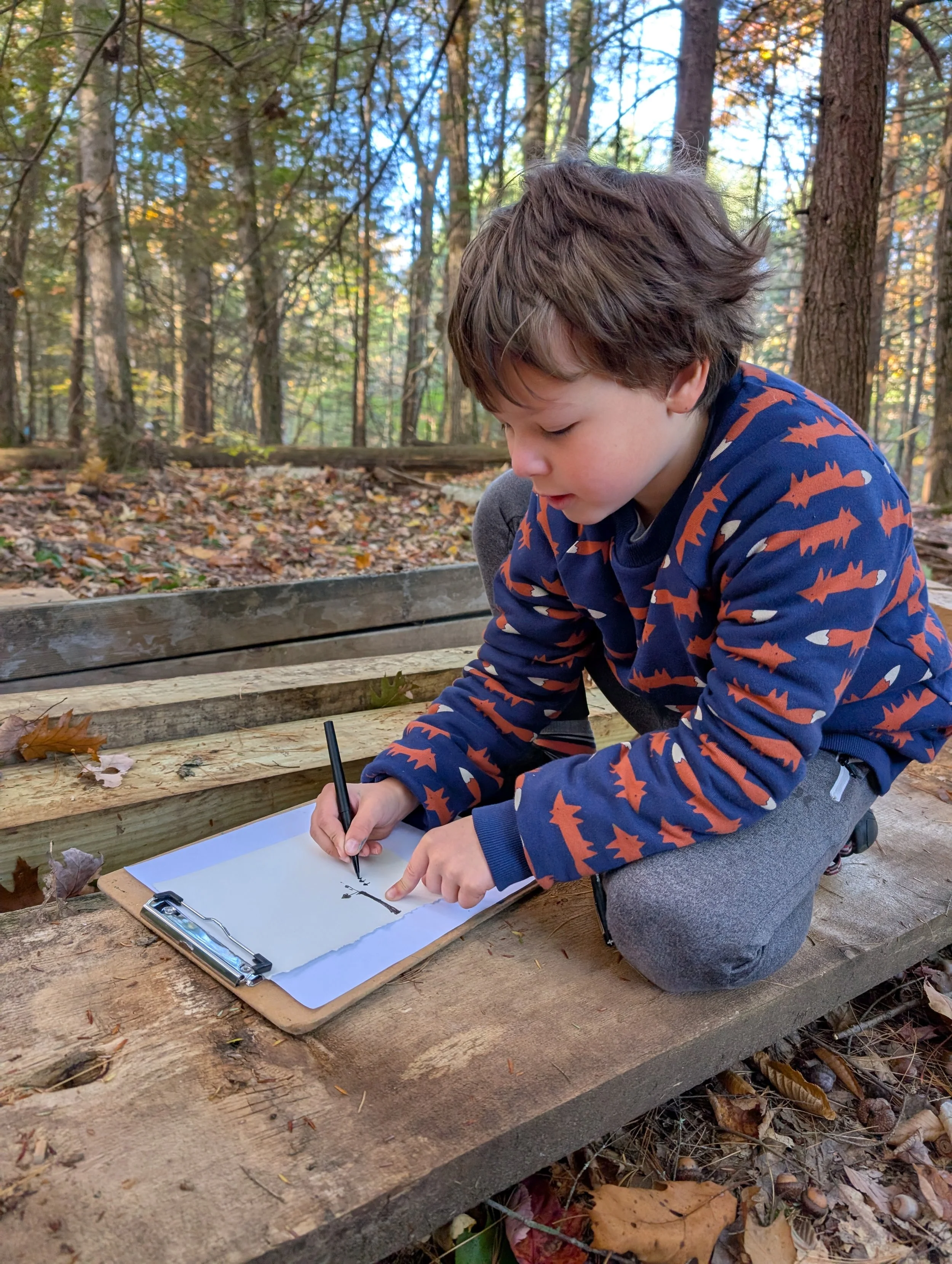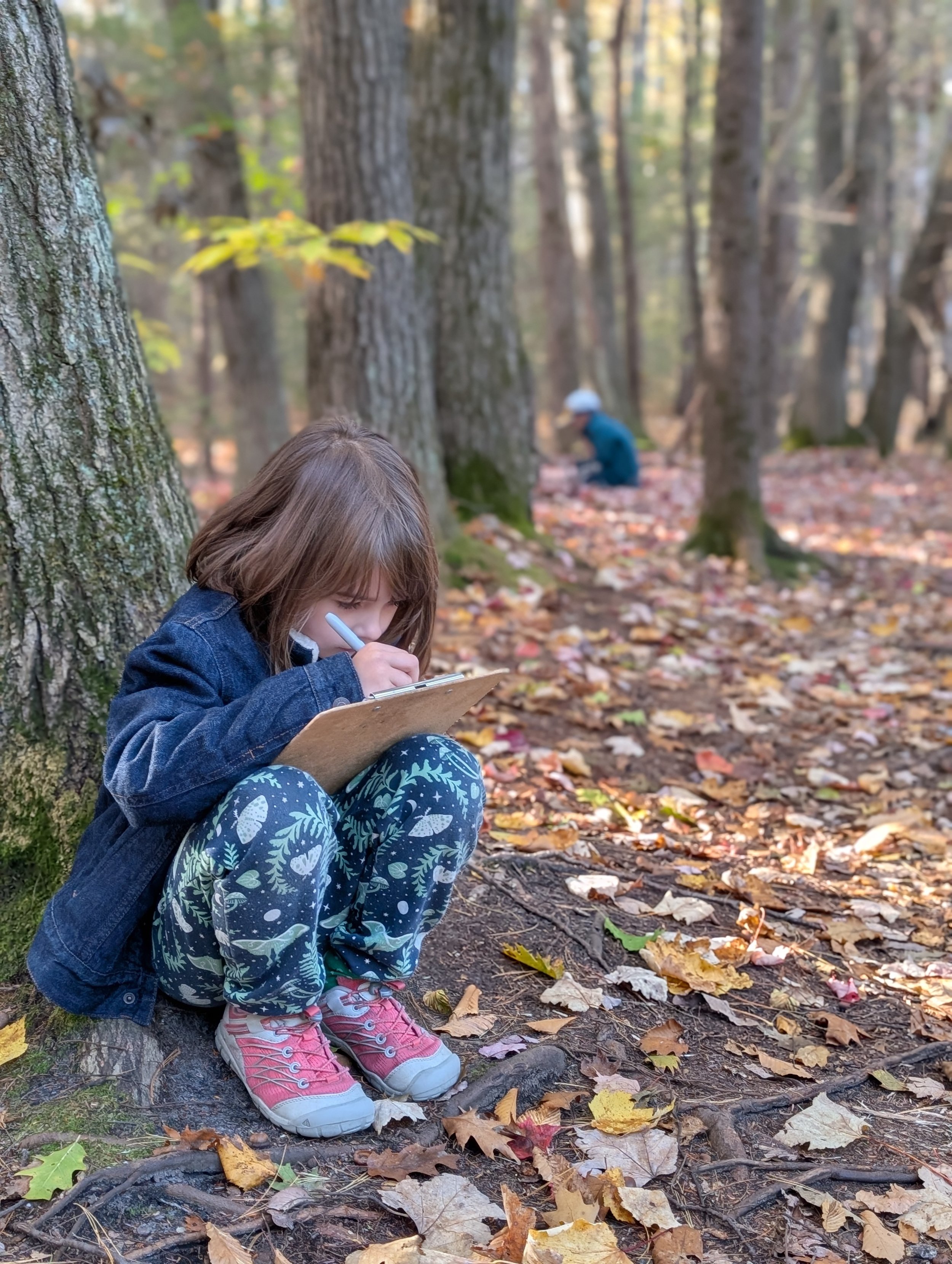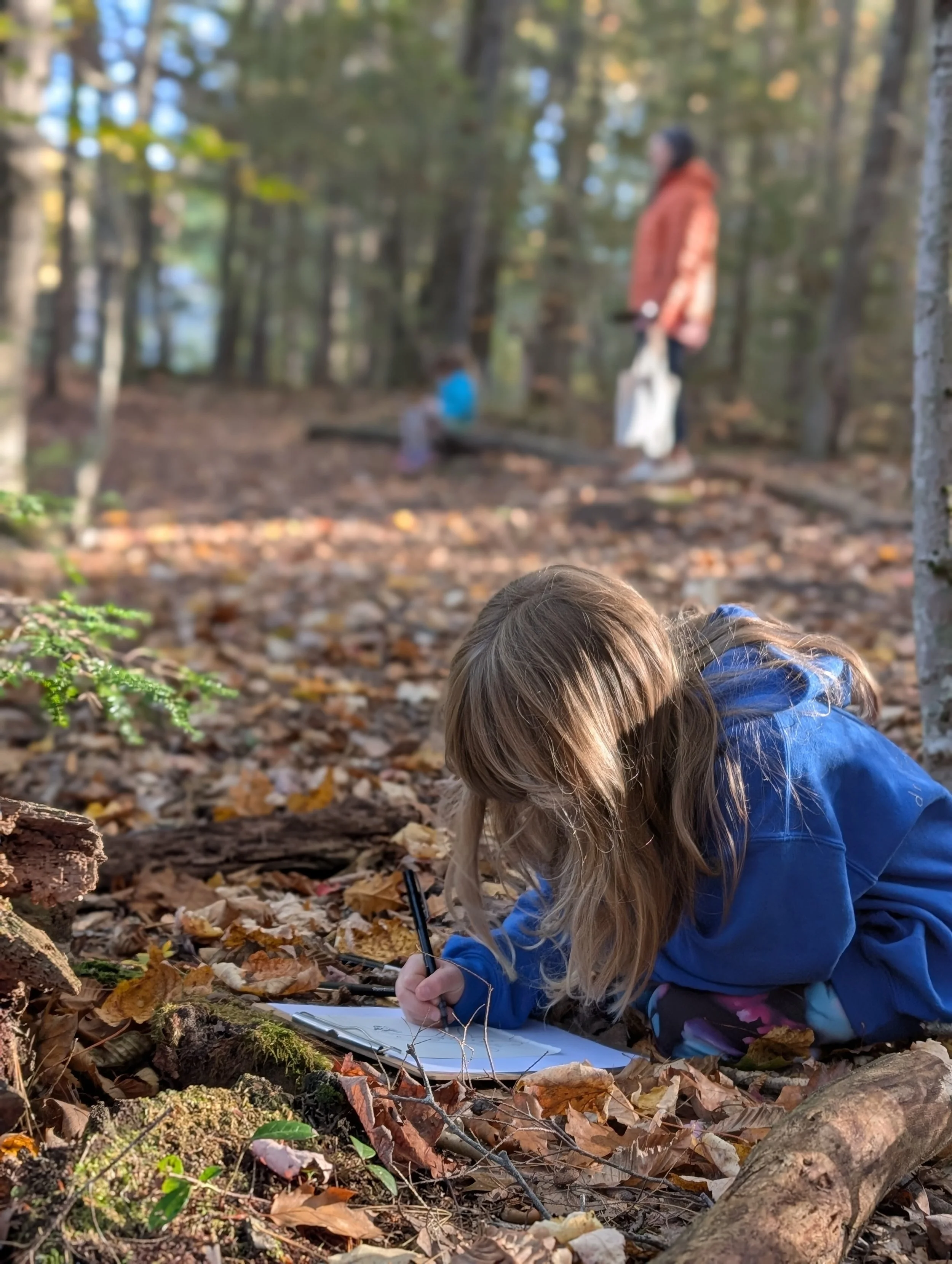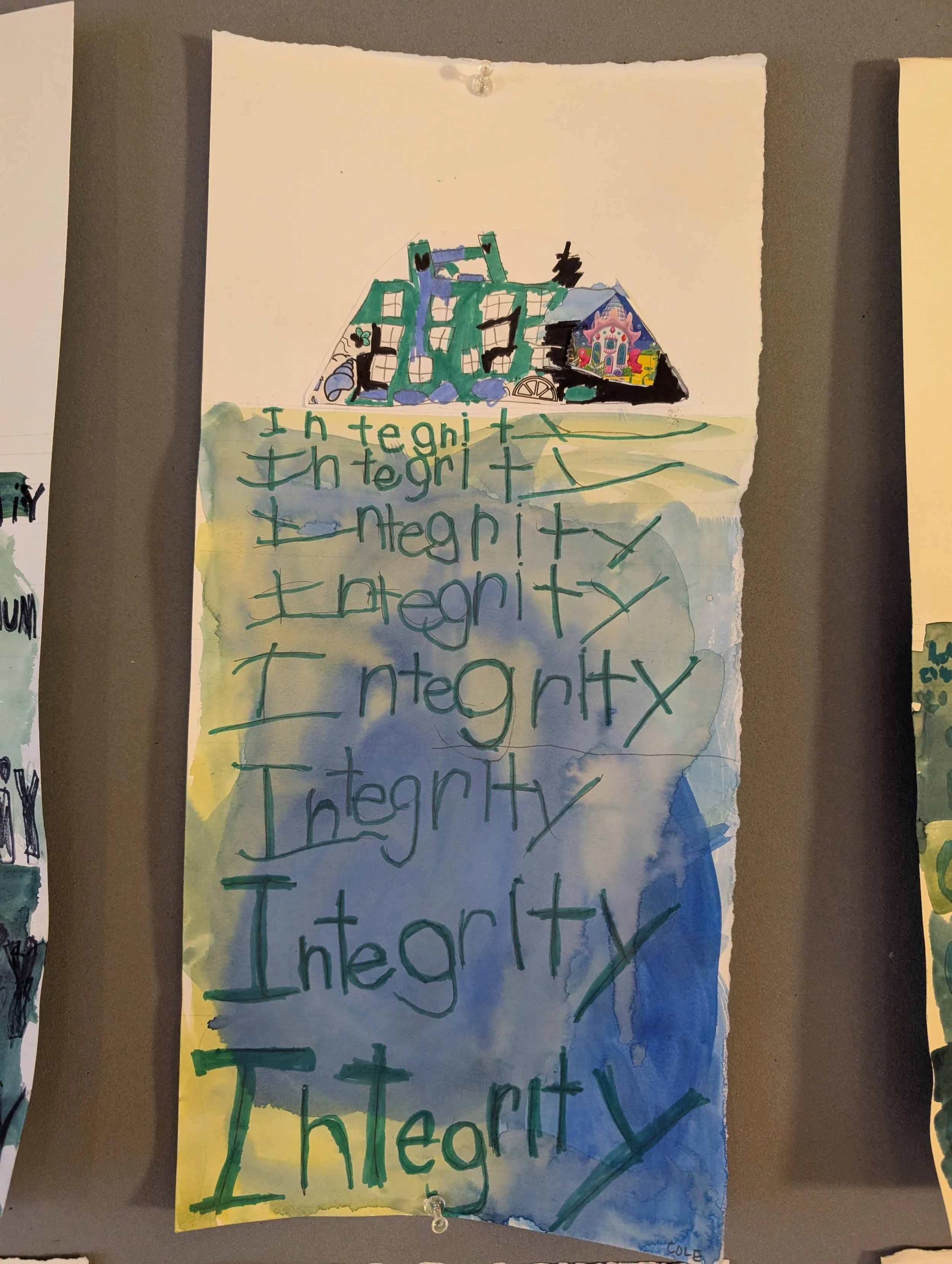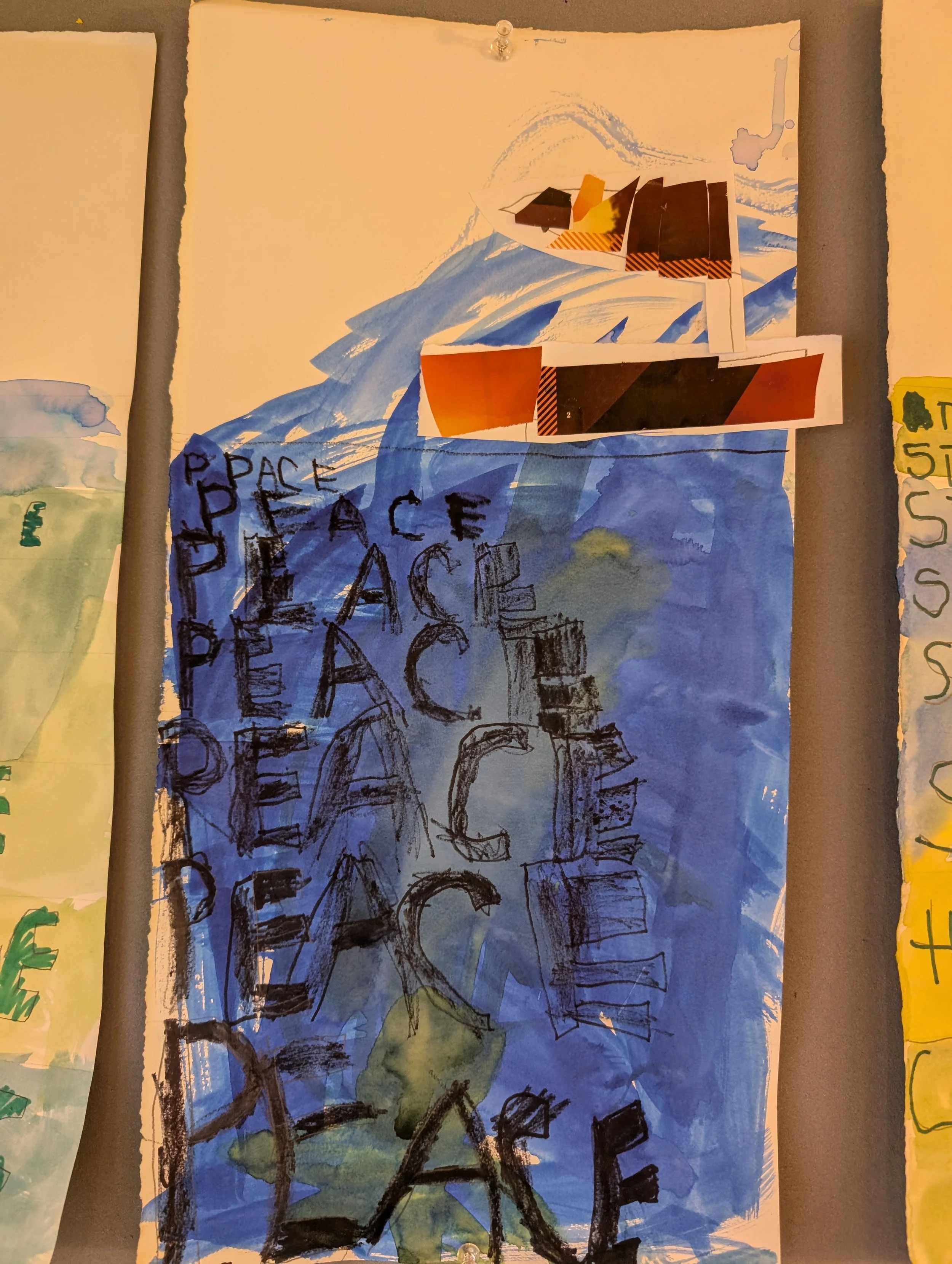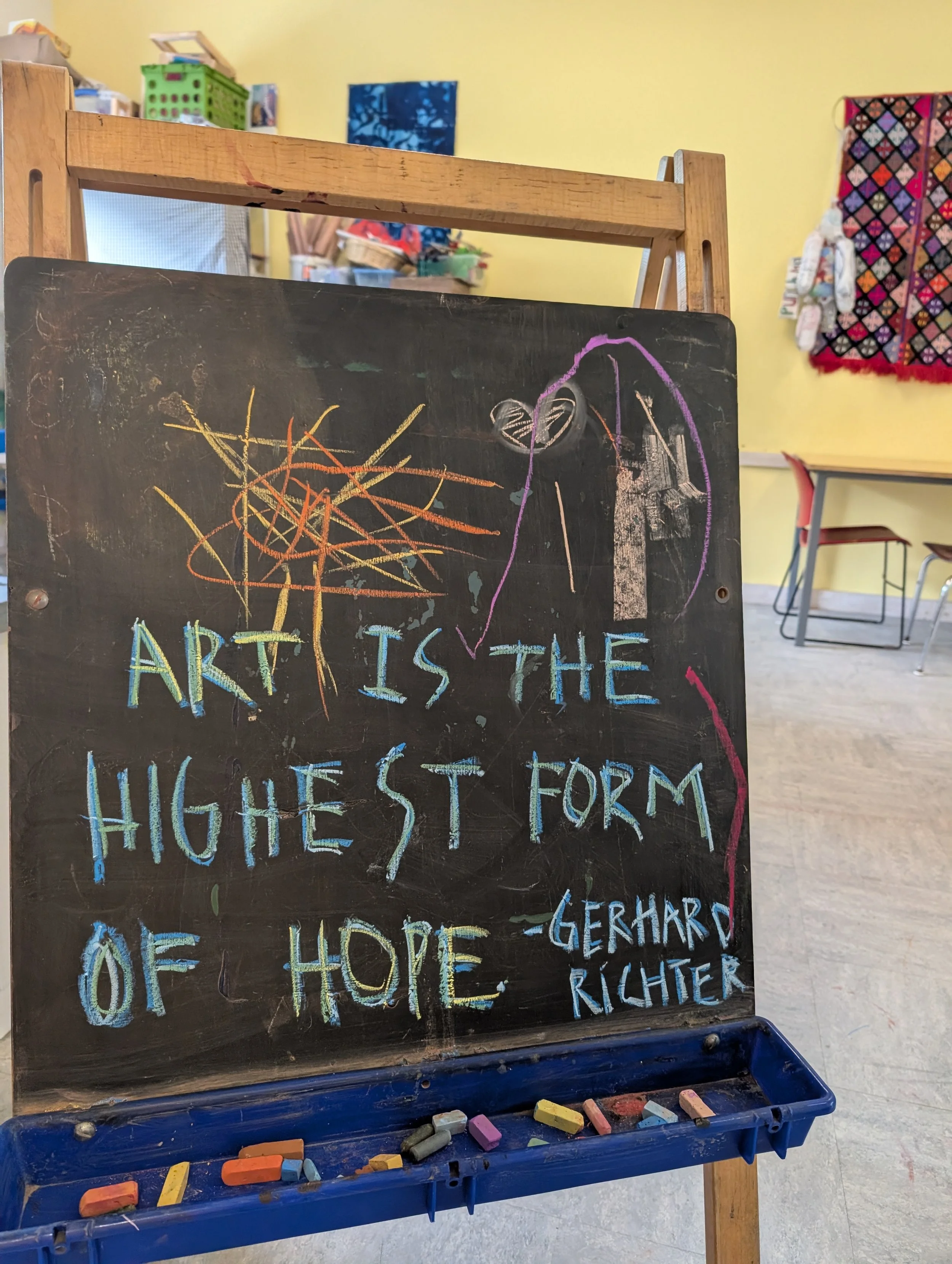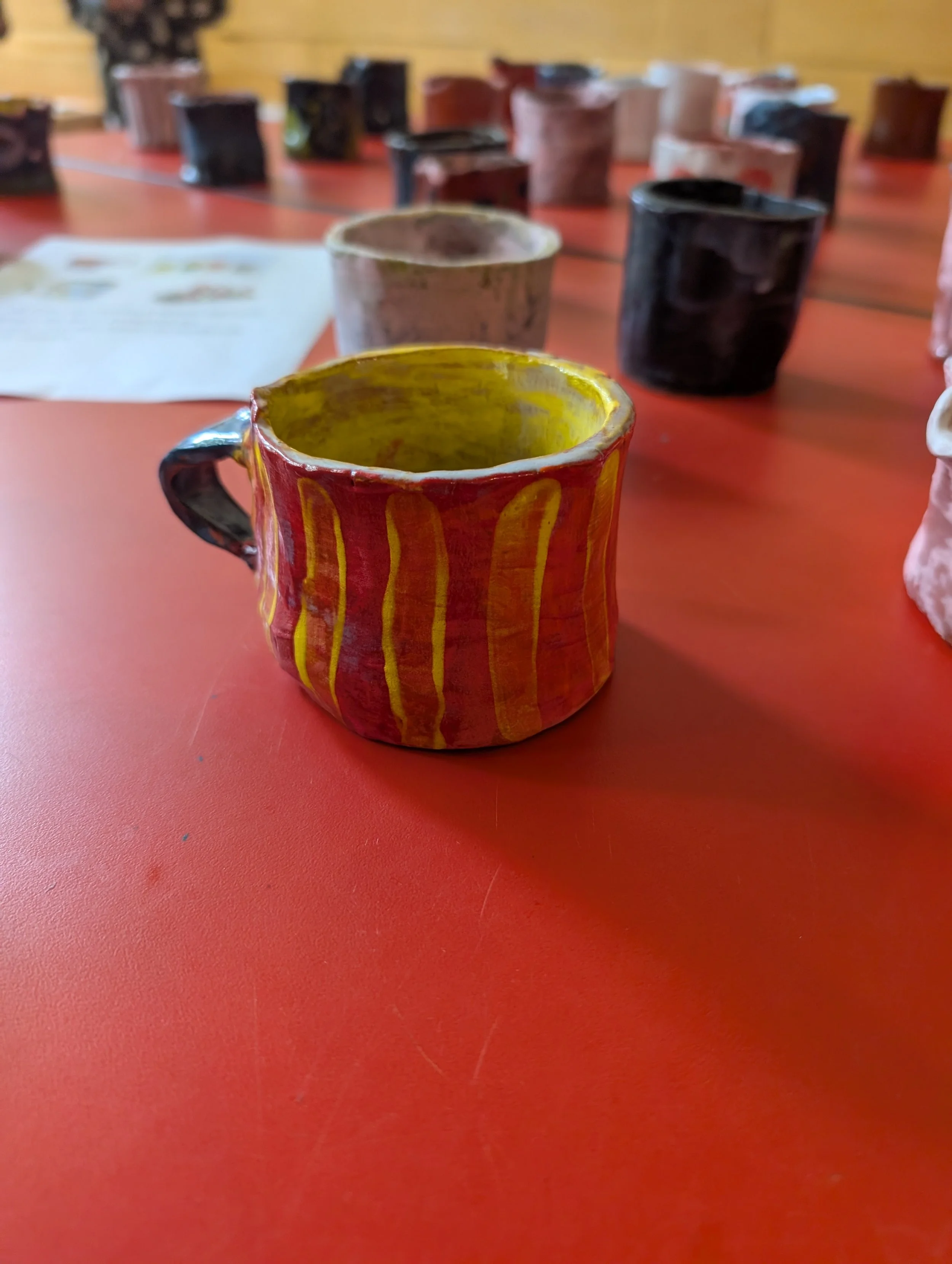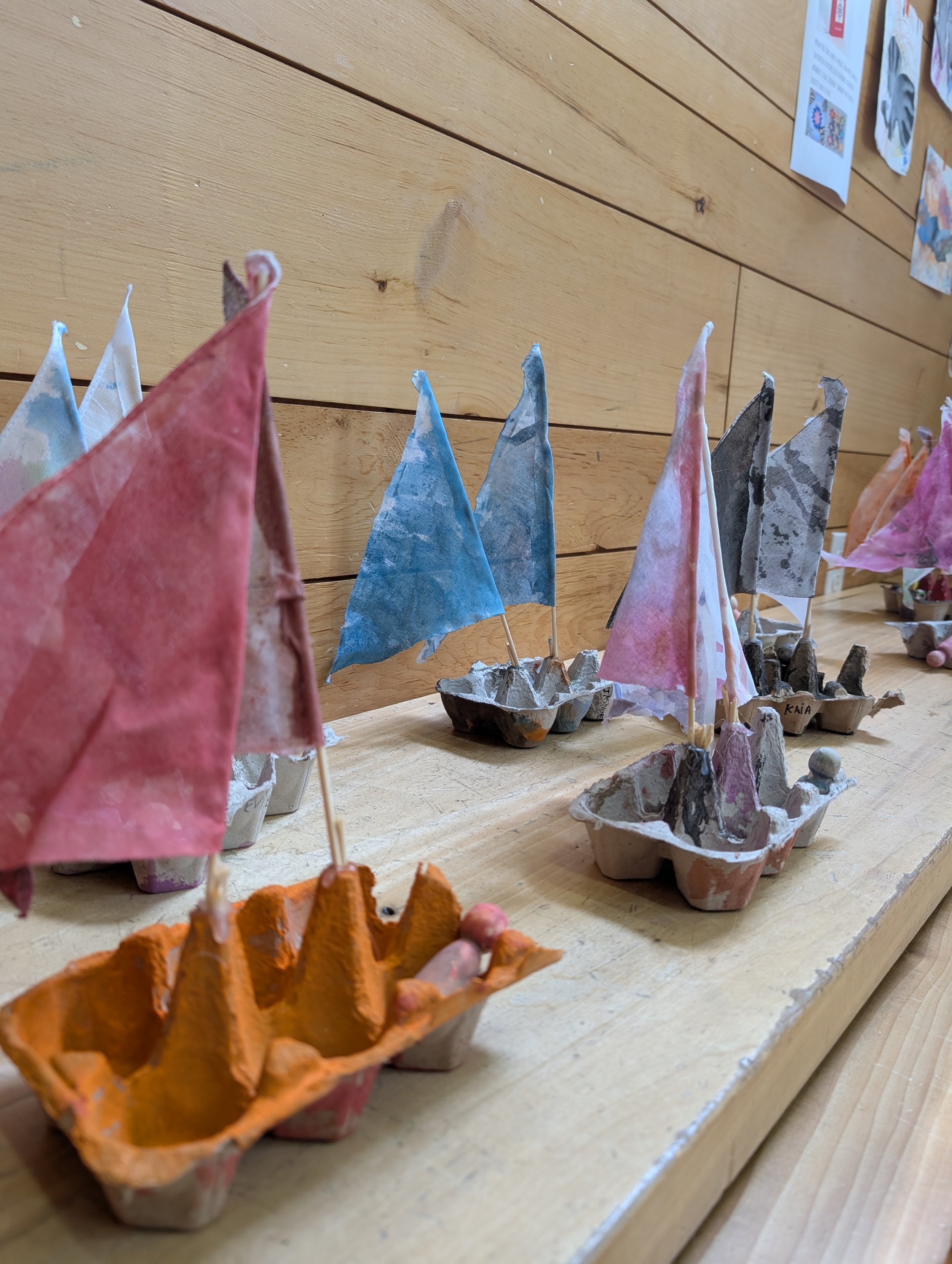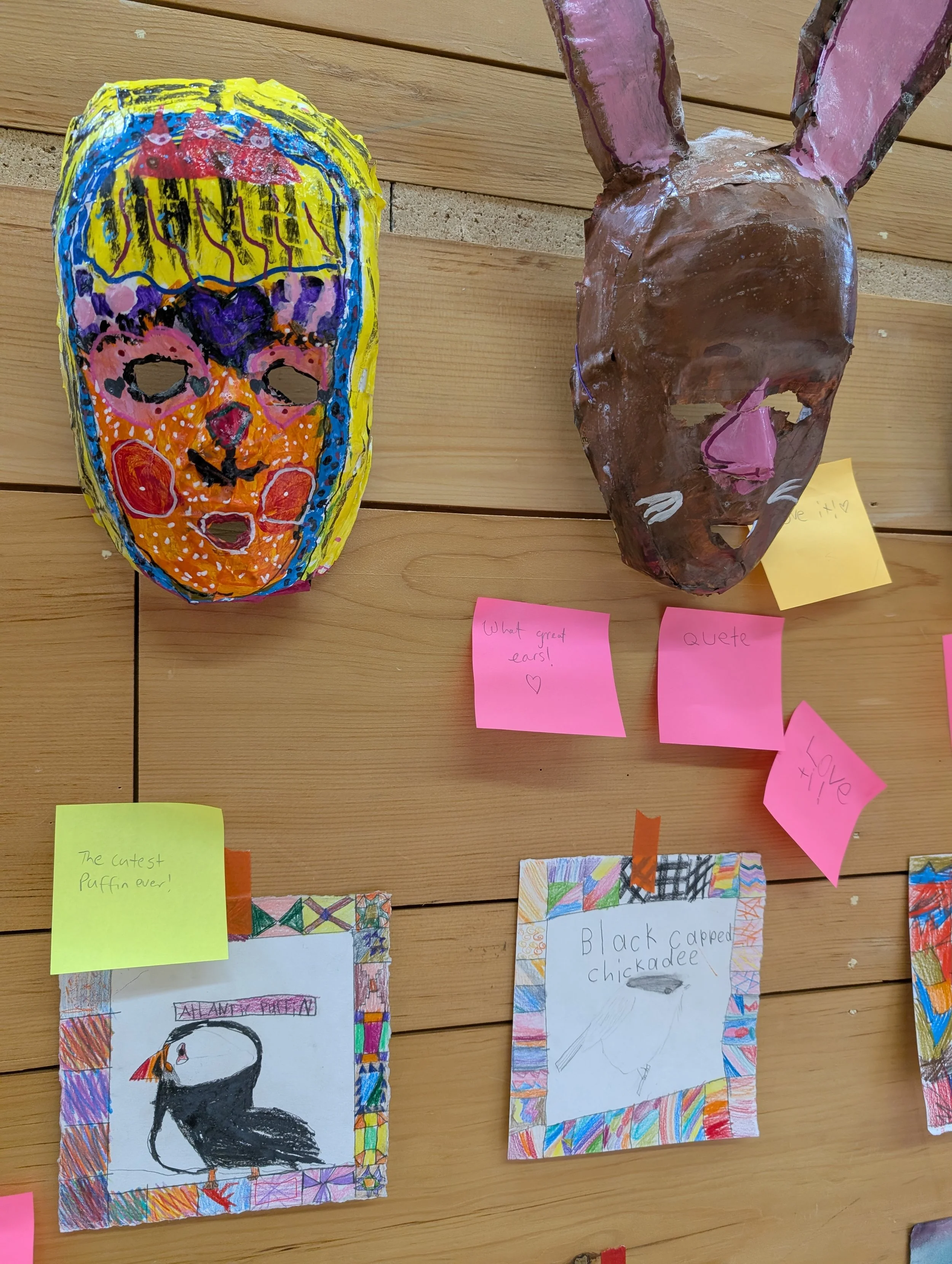
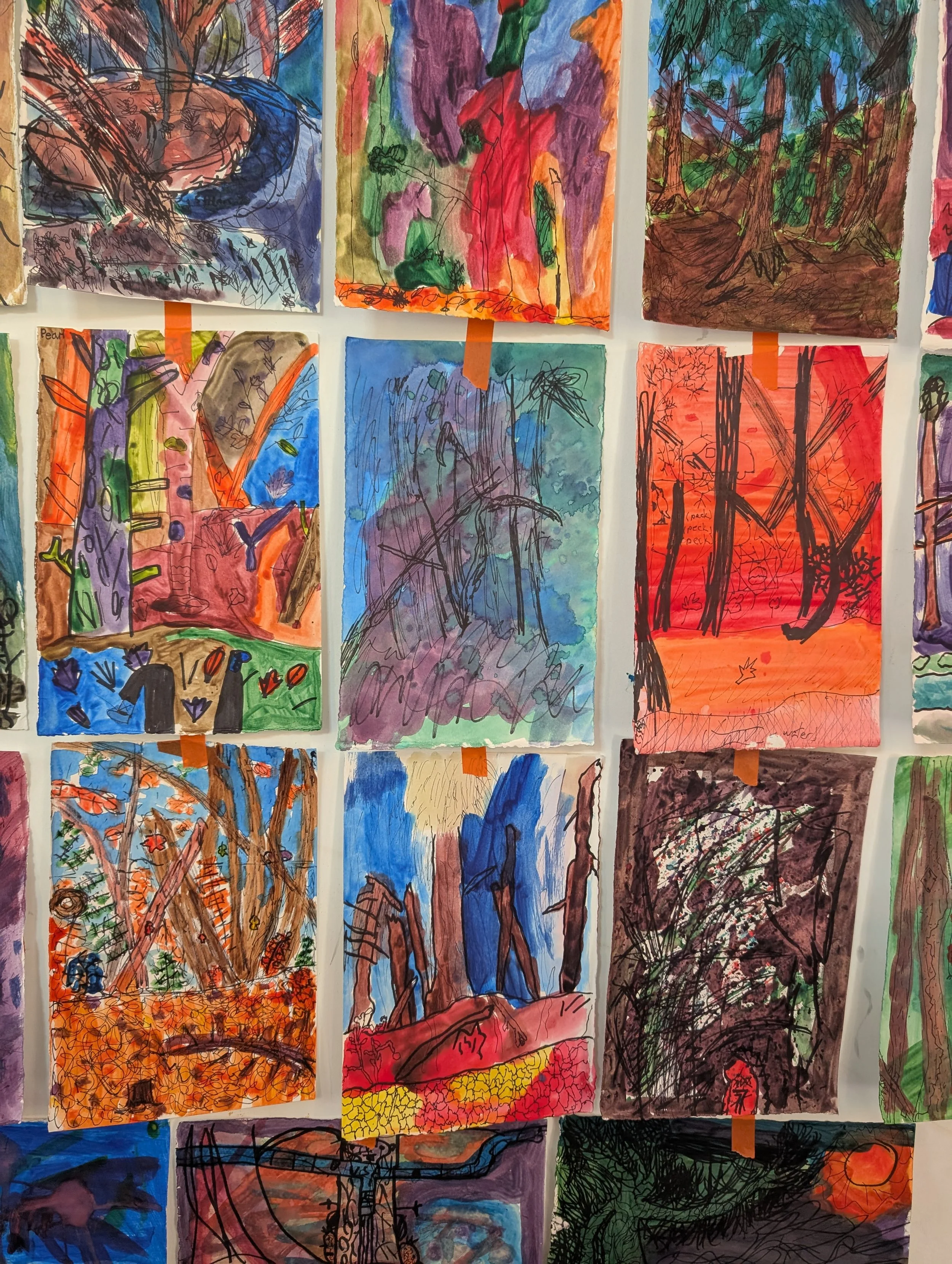
The hope of the art curriculum is that each student learns to see themself as an artist. To work toward this understanding, we cover a variety of media and art applications so every student finds their way to authentically and naturally express their creativity. This teaches that there is no one way to be an artist. This includes printmaking, journaling, drawing, painting, clay, 3-dimensional art, sustainable art, and mixed media.
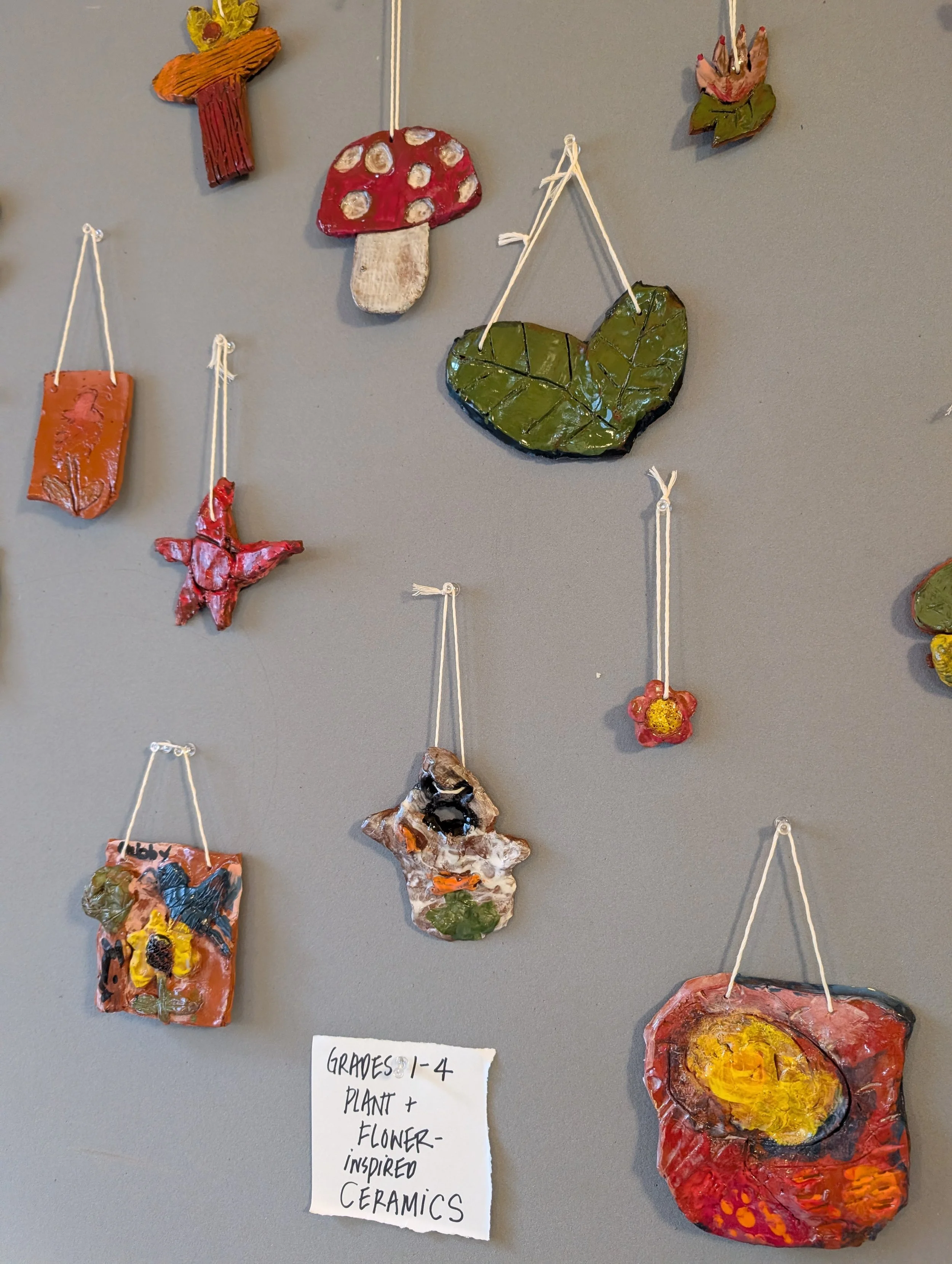
Students approach projects in a few different ways. We focus on a medium, and students experiment with the materials they use. We focus our work through an artist study and create art in the style of that artist. We might also create art with a prompt or theme. For example, last year for the ceramic project in grades 1-4, artists were asked to create a hanging relief sculpture inspired by flowers and plants. We looked at a variety of images, learned techniques for attachment and creating texture, and they could invent their own flowers or plants, or draw from the natural world. At the end of the year, the pieces were hung all together in a garden-like display.
We talk about the creative process and bring awareness to it, including the steps an artist goes through to create a work of art. This includes brainstorming, experimenting, planning, producing, refining, curating/sharing. This awareness allows students to strengthen their metacognitive skills, including identifying where they struggled and learning ways to support themselves through the process. An additional goal is also to move away from binary thinking – that someone is either an artist or is not an artist, or that someone is good at art or bad at art – to a more nuanced appreciation.
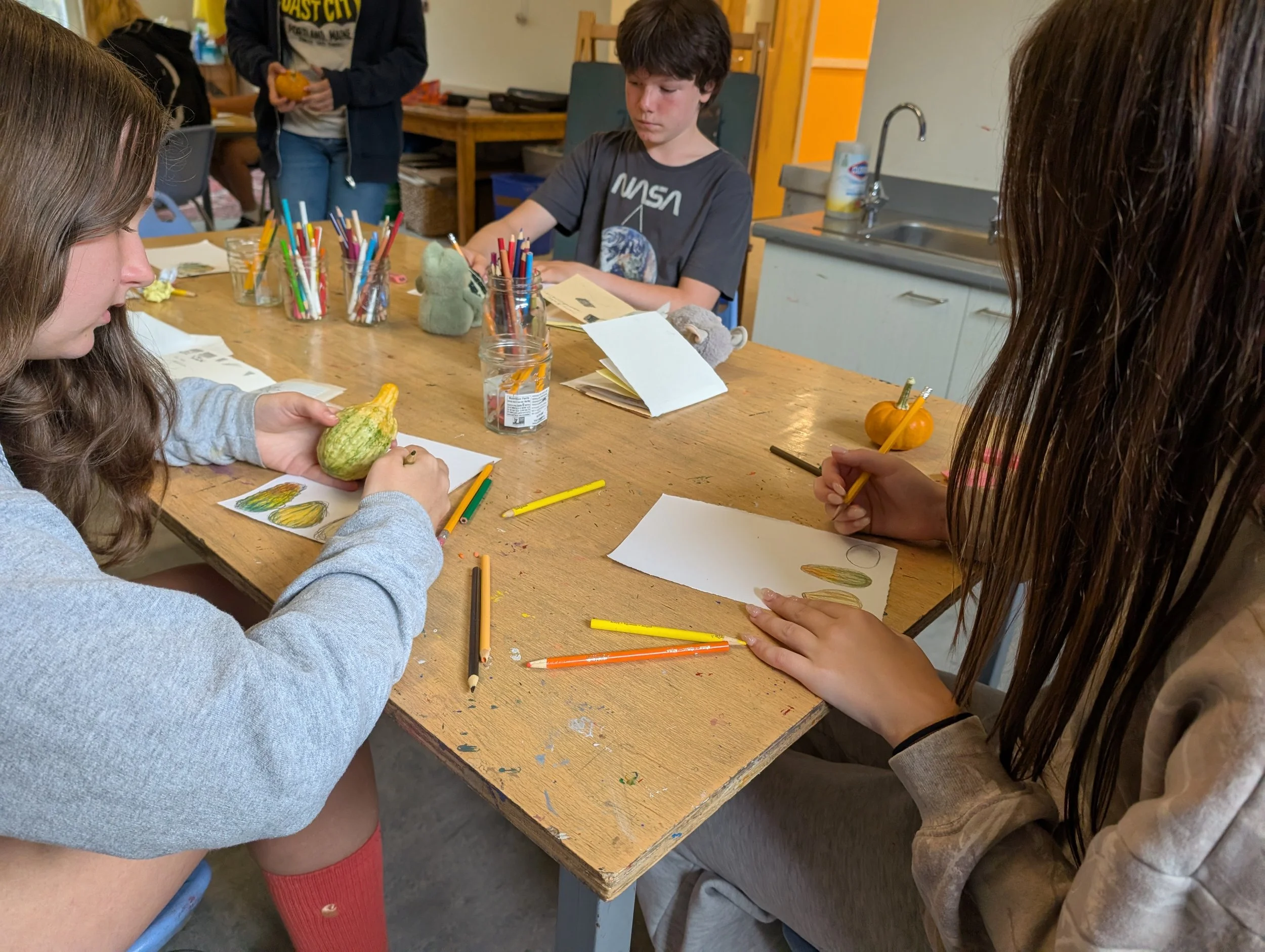
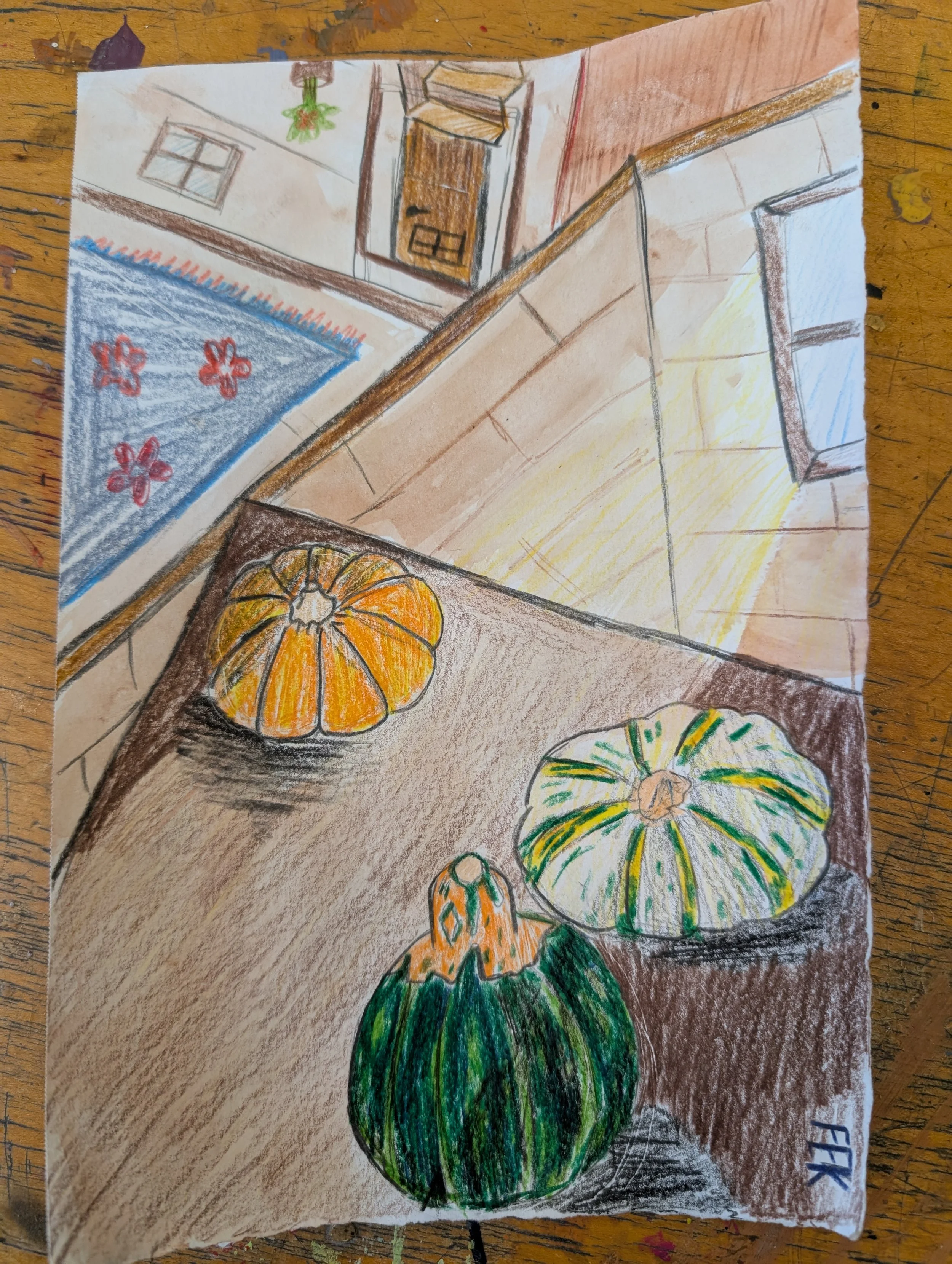
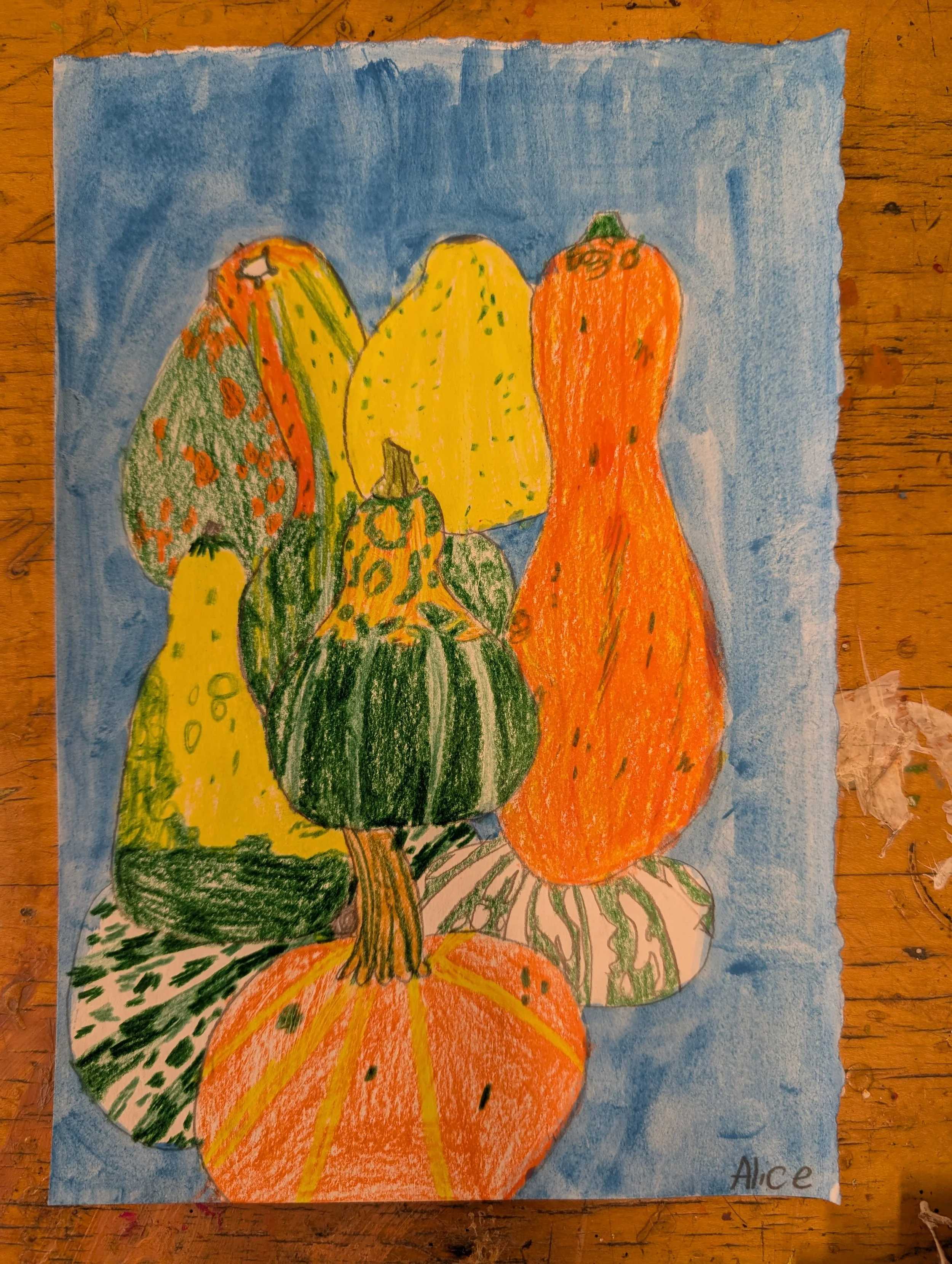
This fall, first through eighth-grade students illustrated gourds. The fall is a season in which gourds, squash, and pumpkins abound after many different class field trips to area farms. Middle school students had a conversation that threaded both art history and the production of art for livelihood, centered on the question, “What does it mean to be a contemporary artist?” They viewed James Barker’s art, which he sells on Instagram. Middle school students considered the commodification of art and how and why artists make choices around selling art to make a living.
In the coming weeks, different grades will work on different projects. Preschool will wrap up painted clay sculpture and move into color mixing on canvas. Kindergarten artists will wrap up Matisse collages and move into Kenojuak Ashevak imaginary animal, mixed-media pieces. First and second grade will create foam plate prints focused on shape and design. Third and fourth grade will create Chuck Close-style animal illustrations while exploring warm and cool colors. Fifth through eighth grade will create layered, etched foam prints that tell a story about a memory or experience.
I always want to share with anyone who will listen that while the finished art product holds value, how it was made, what happened during the process, and within the artist is what is really exciting.