Teachers as Students: Summer Learning Adventures
At Friends School of Portland, professional development is teacher-led and teacher-driven. Because we know that the best learning happens when students are excited, teachers create their own learning plan in consultation with our Director of Studies. In addition to the professional development that teachers choose, as a school that draws guidance from the Responsive Classroom and Developmental Design approach to social-emotional and behavioral learning, one of FSP’s goals has been to send each teacher in the building to be trained in this approach. This past week, two more teachers completed Responsive Classroom training, which means that only over 90% of our faculty have been trained.
Read on to hear about teachers’ experiences of professional development ranging from Hog Island Audubon Camp for Educators, Foreign Language Academy, Wilderness Mental Health First Responder, Friends Forward Quaker Education Conference, and a Regulated Classroom workshop. Teachers answer the questions: Where does your recent professional development fit in with other topics you’ve been thinking about or that Friends School has been focused on? Where do you see this experience most concretely showing up in your practice this fall?
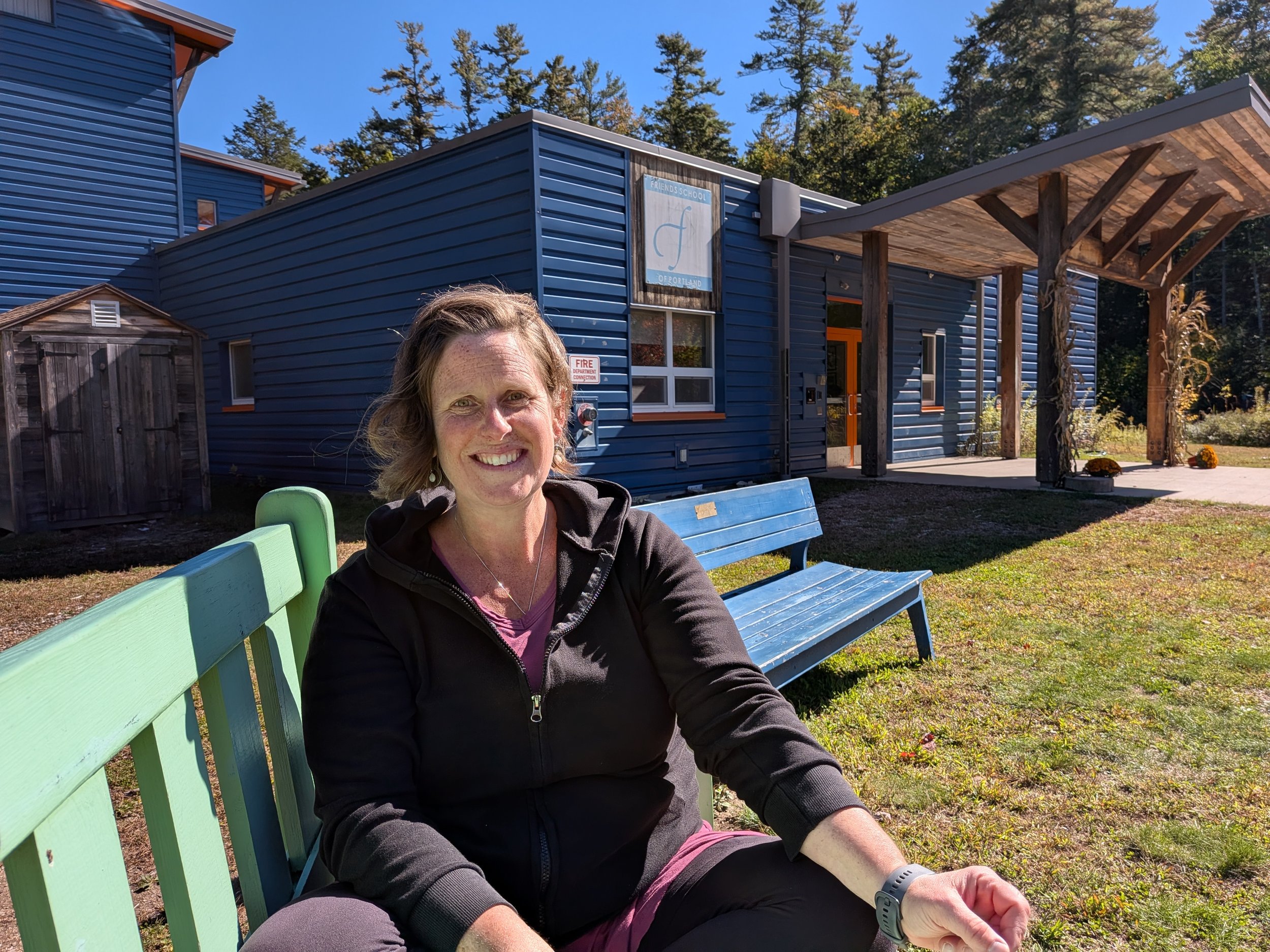
Carie, Kindergarten Teacher
Hog Island Audubon Camp for Educators
Carie Garrett, kindergarten teacher, attended Educator Week at Hog Island Audubon Camp, a “sumer camp for adults” with a mission to educate outdoor educators. Carie joined fifty educators from all over the country.
“When the bell rang, we knew something wonderful was going to happen. Maybe the wonderful thing would be birding with a professional naturalist; or maybe it would be a speech by the founder of the Puffin Project.
“One aspect of the week was how good it felt for a group of teachers to be cared for. I could see joy in the staff, with something like making us ‘creamed pufflings’ as a special pastry dessert, caring for a group who usually does the caring.
“I so appreciated the connections made with others. There has been a common theme in all of the professional development I have done recently, that when I face the social demand or vulnerability asked of me, I find a connection in a way I couldn’t have if I hadn’t persevered. We had a deep foundation for conversation, given our shared interests.
“The most tangible way this experience is showing up this fall is that when observing nature, I try to remind myself: ‘wait another minute.’ There was an approach to observing at Hog Island that asked, ‘What would you see if you watched for one more minute?’ This dovetails with my work toward simplicity in kindergarten. I would call it a self-check: ‘What more can students get if given one more minute? … What more can you learn in a minute?’ It’s a pause, it’s a lingering. What drew me (and still draws me) to Friends School is the way we do what we said we would do. I feel this week has helped me make sure to do what I said I would do and what I’m committed to doing, letting exploration play out – not rushing ahead to the next thing. Children are natural lingerers, and the students found the blister beetle we showed you the other day when we stayed another minute. The way children teach me is a big part of what’s important to me about teaching.”
When I asked Carie, “But I think of you as such a lingerer. Hasn’t this been part of your approach all along?” Carie shared: “It takes real work to linger. It has been so great to be reminded of its value.”
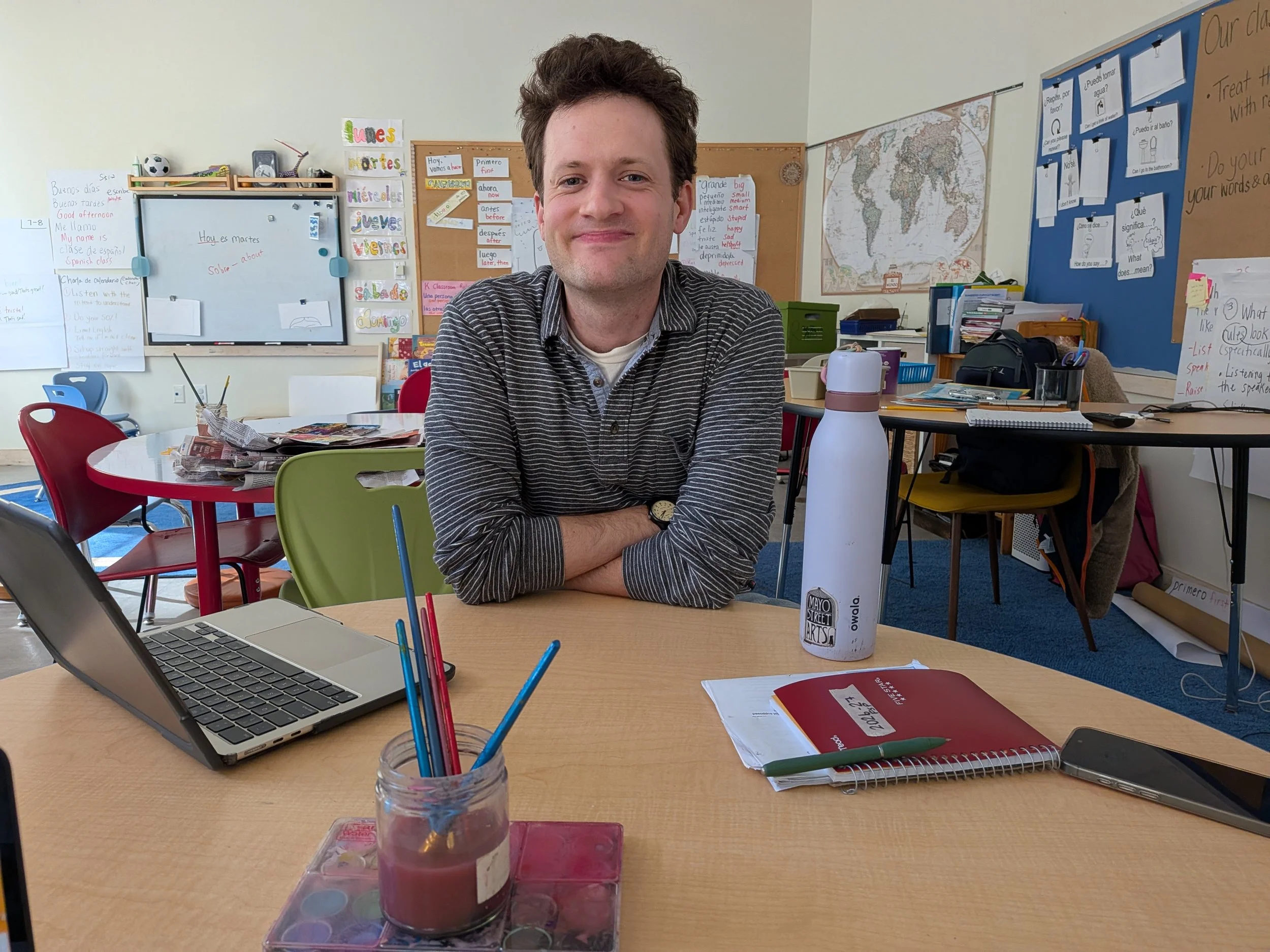
Robbie, Spanish Teacher
Foreign Language Academy through the Massachusetts Department of Education
Robbie spent three days at Westfield State University in Massachusetts for an immersive language teacher program that promoted teaching for proficiency. He described a multilingual experience with a range of languages: Romance languages, Mandarin, Latin, Arabic, and Sign Language. He befriended a group of Spanish teachers; and was able to talk in Spanish throughout the experience.
“As educators, we need to be really specific about functions and tasks we’re asking of learners, and what someone at a novice proficiency level are able to do. This involves what a task looks like at each level; and how to level up a task. The majority of our Spanish learners at Friends School would fall into the novice category. Our eighth-grade students are intermediate, ready for Spanish 2. Novice learners have special capacities and those should be activated in teaching.
“The program advocated for the rule of using 90% of the target language in the classroom as people move from notice to intermediate, a working goal for me with seventh and eighth grade students. Consistent comprehensible verbal output is so important on my part to help our students become more proficient novice and then intermediate learners. For me to keep myself to that standard is really important; I want to use language they’ve learned and then when I use new language with them, I’ve taught it first. That is my diligence. I think it’s very empowering for students to hear full directions in Spanish and understand, with visual cues and with gestures.
“I now have more language to use when describing what students can do. For example, identifying a cognate, words that sound and are spelled similarly in two languages. Words that look like similar words in English. Though much of this is intuitive, it has really helped me get very specific in my praise: knowing what are the superpowers of novice learners. I can name and reinforce as students work. Clear asks help encourage willingness to participate in the face of discomfort and challenge. What tasks empower and appropriately challenge?
“There was a lot of learning for me too – speaking in Spanish during our lunch breaks, getting to practice my Spanish with a new group of friends, one of whom is from Argentina. I am still a language learner, even at the advanced level.
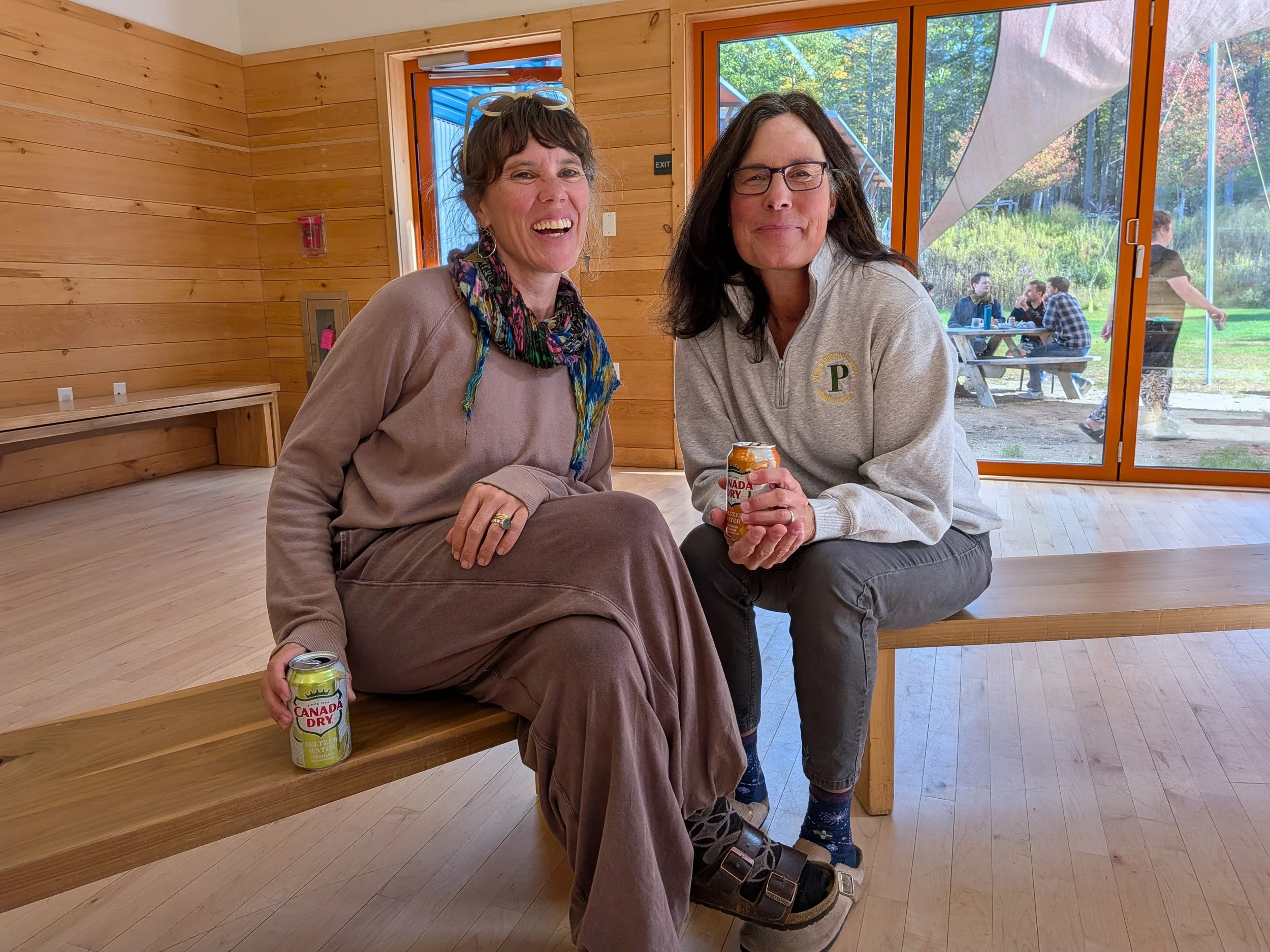
Kate Cass and Mary Anne Peacock, 1-2 Teaching Team
Wilderness Mental Health First Responder, Wildmed in Western Mass
Mary Anne:
“Though the training was based in wilderness experiences, that part was minimal. I have brought it up with so many people since. We just brought it up in conversations with our other 1-2 teaching team. I learned so many skills for my own self-regulation and have been using the breathing methods. The teacher started each session with mindfulness sessions for us.
“I think that Kate and I naturally co-regulate with our classroom. But there was something clarifying about thinking of this as a grounding framework. A lot of it is about validating how someone feels before trying to problem-solve. The teacher gave us sentence starters never to use; which were easy to imagine using, especially with other adults. For example, try to never start with “At least” or “Just” when being with a student in distress.
“The big goal is validating a student’s feelings and recognizing how powerful that co-regulation can be. As a teacher helping a student, start with recognition, and leave space for having feelings. I’m working on not trying to rush in and fix it. Communicating instead that: fear happens to all of us. I get it; things can feel hard. There was a lot about asking questions.
“Everybody here is so good at this work. It gave me a lot of appreciation for Friends School. One of my favorite takeaways is the idea that behavior is an expression of a need. I could have used that previously as a teacher. To have that idea more easily accessible is a powerful thing.
“It is really empowering – to face a situation without an easy fix; having the agency as a caring adult to have a little bit more knowledge and patience.”
Kate:
“The training covered a lot of information about the nervous system and the ways it gets activated. How to approach people who are in a state of activation, whether that be activation or shutdown. The work is about getting down on their level, remembering it’s a somatic experience for them.
“I really immersed in the physiological teachings. If someone is stressed out, their body might be reacting out of proportion to what caused the stress – but the physical symptoms need tending. Breathing exercises slow the heart; splashing your face with cold water causes a beneficial rapid shift in temperature; going on a run or moving the body can expel adrenaline and cortisol. The training also suggested teaching young people directly about what might be happening in their bodies as a response to their brain.
“Another takeaway was that instead of saying someone has anxiety or is anxious, we say ‘someone is activated.’”
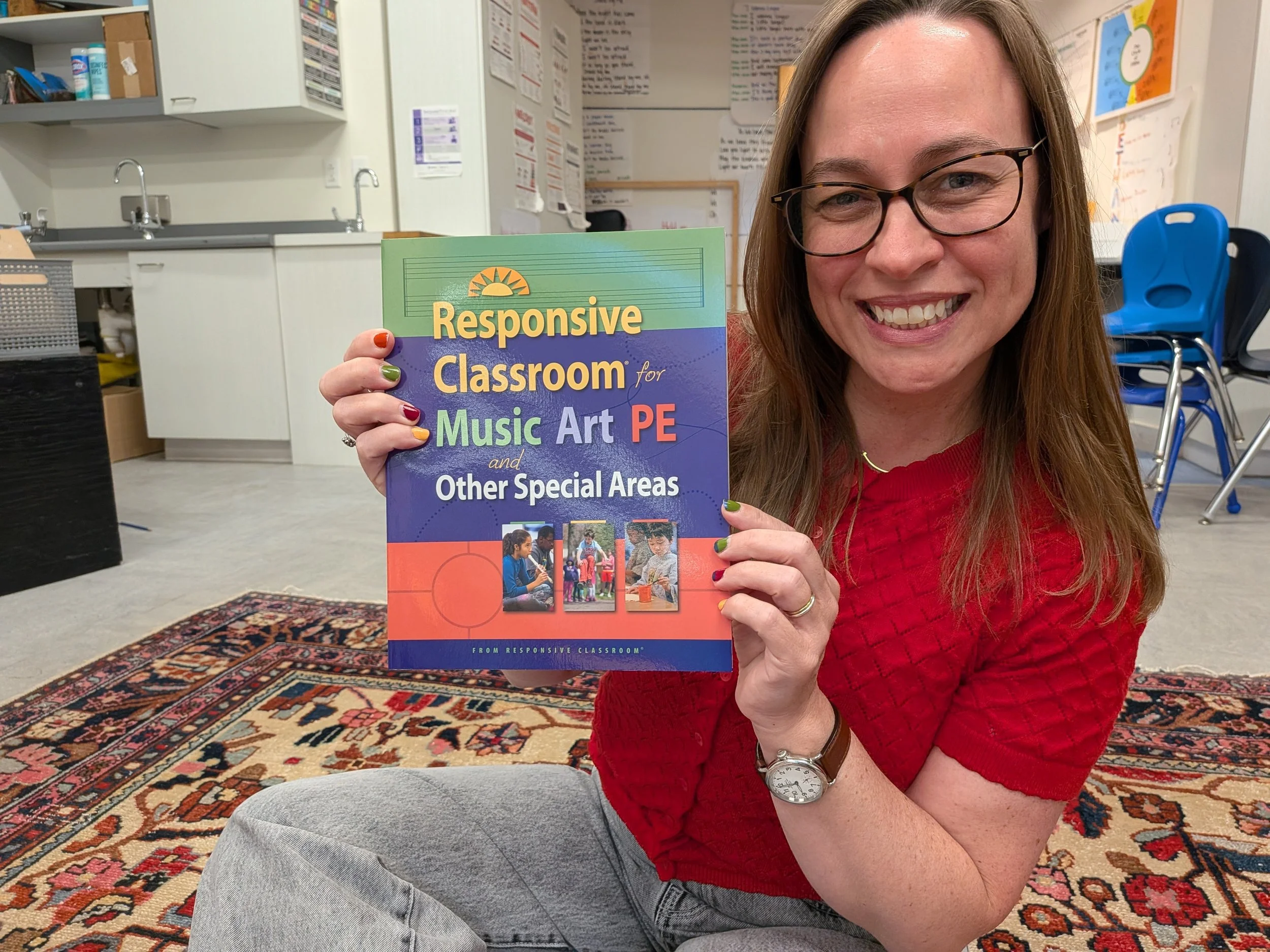
Bethany, Music Teacher
Responsive Classroom for Specials Teachers
Our school draws guidance from the Responsive Classroom (elementary) and Developmental Design (middle school) approach to social-emotional and behavioral learning. As part of our Strategic Plan, Friends School set out to send all faculty to Responsive Classroom or Developmental Design trainings. This past week, two more teachers completed their training, which means only three more of our current faculty are left to take part in the training.
This past week, Bethany took part in a one-day online Responsive Classroom training specific to Specials Teachers at the elementary and middle school level. She and Billy joined fifteen other participants from around the country.
“I appreciated the way this training was tailor-made for Specials teachers. It assumed most of us worked with most of the students at our schools; it assumed we had quick turnovers spatially and what that might look like for our students.
“Responsive Classroom, to me, is a language we use throughout the building, an approach to how we might respond to anything that might come up. Much of this is about anticipating what hasn’t yet come up – thinking through and smoothing out ahead of time.
“The ideas behind Responsive Classroom didn’t feel entirely new, having been here for five years. But I found it affirming to think through routines so carefully. At this point in the year, what could use a tune-up? What could feel better? You don’t always get to ask ‘How can we make small changes that make a big difference?’
“Another thought I was left with had to do with how often we use silence in our classrooms as a Quaker school – beginning, middle, and end of a class. Responsive Classroom doesn’t name or describe silence as a tool, but silence goes so well in tandem with the ideas at its center: self-regulation and self-reflection. Taking regulatory breaths: I find value in that as a musician, as a teacher. There is a building-wide fluency, a common expectation here, that we can benefit from a deep breath.
“Responsive Classroom’s focus on ‘sweating the small stuff’ came to feel parallel to a music teacher’s role of disrupting extra sounds that come out of your students or musical performers. In performance ensembles, musicians use the term ‘ready position.’ I came out of this training thinking: ‘Teach them ready position.’ It’s a tangible student behavior that can be named and taught.
“The training advocated for student choice, which is a little different in a music class. My next step is to troubleshoot whether these ideas can be incorporated into active music making.
Aliza, 5-6 Science and Math Teacher
Regulated Classroom
In August, five faculty members from FSP joined a handful of teachers from RSU 14 and the full faculty from Fiddlehead School of Arts & Sciences for a training session led by Emily Read Daniels, author and creator of The Regulated Classroom.
Over the course of this one-day training workshop, Kate, Kathryn, Robbie, Aliza, and Jen explored strategies and activities related to the “four core practices” in the Regulated Classroom framework:
Connectors are practices that build and repair relationships
Activators are practices of collective rhythm-making
Settlers are practices that calm the body
Affirmations are practices of embodied gratitude
The training also explored the neuroscience behind co-regulation to promote social connection, cooperation, impulse control, and academic learning.
Aliza: “This training shared how to help students be more comfortable in a variety of learning environments, as well as tips and tricks to create safe environments for students with a variety of nervous systems. It shared the idea that we are all different and we all have varying needs throughout the day. The goal was to help us as educators be more connected and responsive, so that we can help grow our students’ learning zones.
“We do a lot of this in spirit and culture at Friends School, but it can really help to name these things and make them more obvious. We can lose track of why we do so many things that feel so natural in teaching, and it helps to deeply understand how beneficial these practices can be. It’s always good to shine a light on your practice that you might have taken for granted.
“One very specific thing I’ve tried is collective rhythm-making as part of making community connections. I’ve tried it out a little, and I’d like to try it more. It’s fun – I don’t know the science behind it, but it’s related to the power you can feel at a music concert. We should ask Bethany about it!
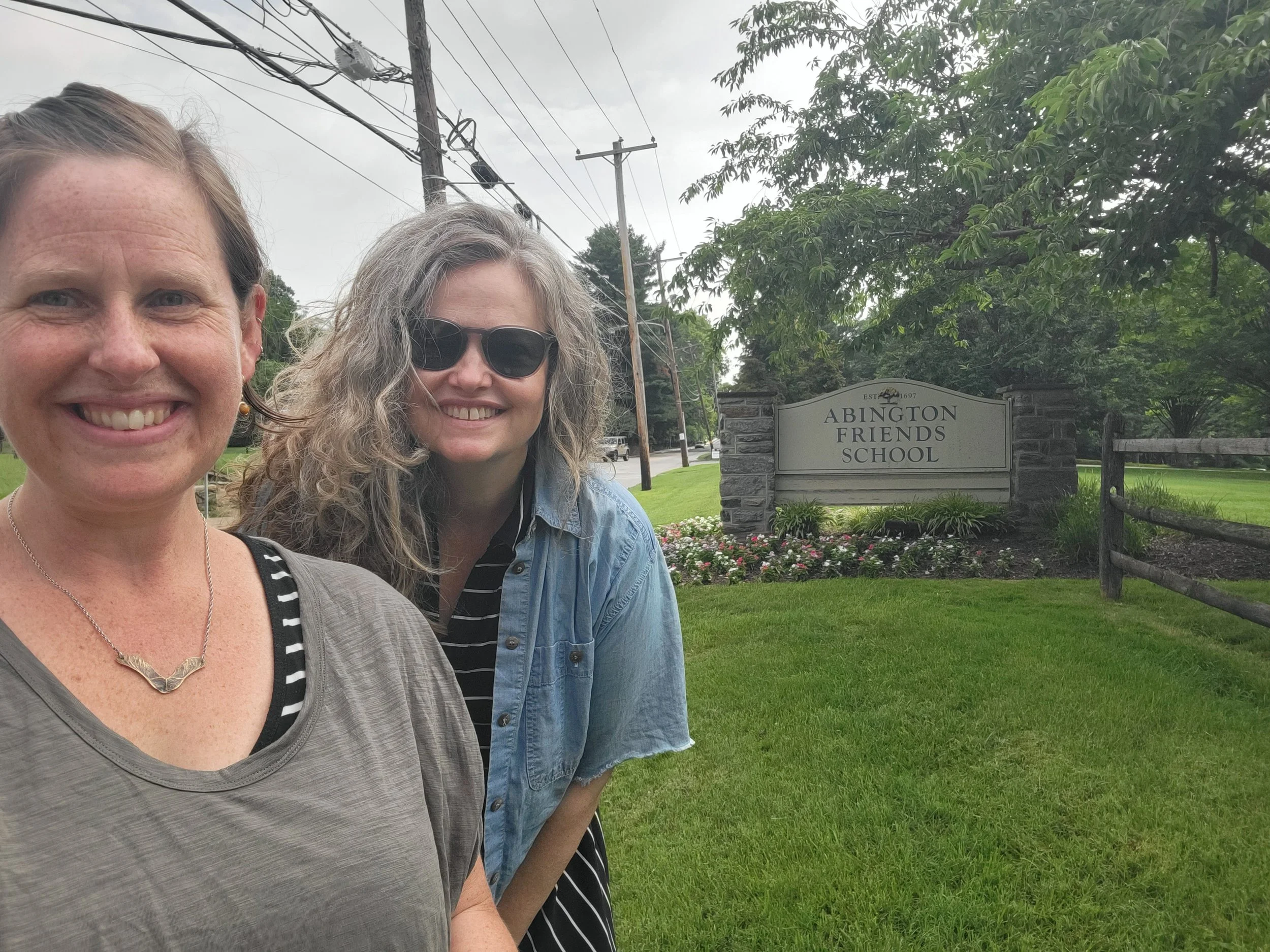
Aila, 1-2 Assistant Teacher
Friends Forward Conference
Abington Friends School offered its first Friends Forward conference this summer, which will become an annual conference that Friends School of Portland hopes to send more teachers and staff to in the future. Aila and Carie were able to travel to the Philadelphia area to take part in this exciting event that brought together Quaker educators. The stated goals of the conference were to give participants the opportunity to:
deepen their understanding of Quaker education in this moment
reflect on the practices and principles that ground Friends schools
learn from colleagues doing thoughtful work across disciplines and departments
gather in community through conversation, worship, and shared experience
Aila and Carie came back from Philadelphia with renewed enthusiasm for connections with other Quaker schools. They led a faculty spotlight with faculty and staff during our August work days, which shone a light on some of the energy and ideas they’d brought back with them.
As Aila said: “The Friends Forward conference was an opportunity for Carie and I to connect as colleagues, and it strengthened our ties with the Quaker education community all over the country in a way that I had never done before. Then we got to bring that back, to hopefully help spark something back in Maine.
“Something that came out of it for me was that: there’s something about being more remote geographically from other Friends schools. We felt a little intimidated going into it: how Quaker are we compared to schools that are over 300 years old? Are we doing it right? Through our meetings and through hearing other teachers, it was incredibly affirming. We’re doing great work here. Even though it felt removed with those miles between our schools before the conference, the connections that we made and hearing other teachers talk about the work that we do and the way that we do it: it made me feel stronger about the powerful work that we’re doing building relationships with our students and letting our lights meet their lights in the classroom.”