Klingenstein Fellowship Reflections
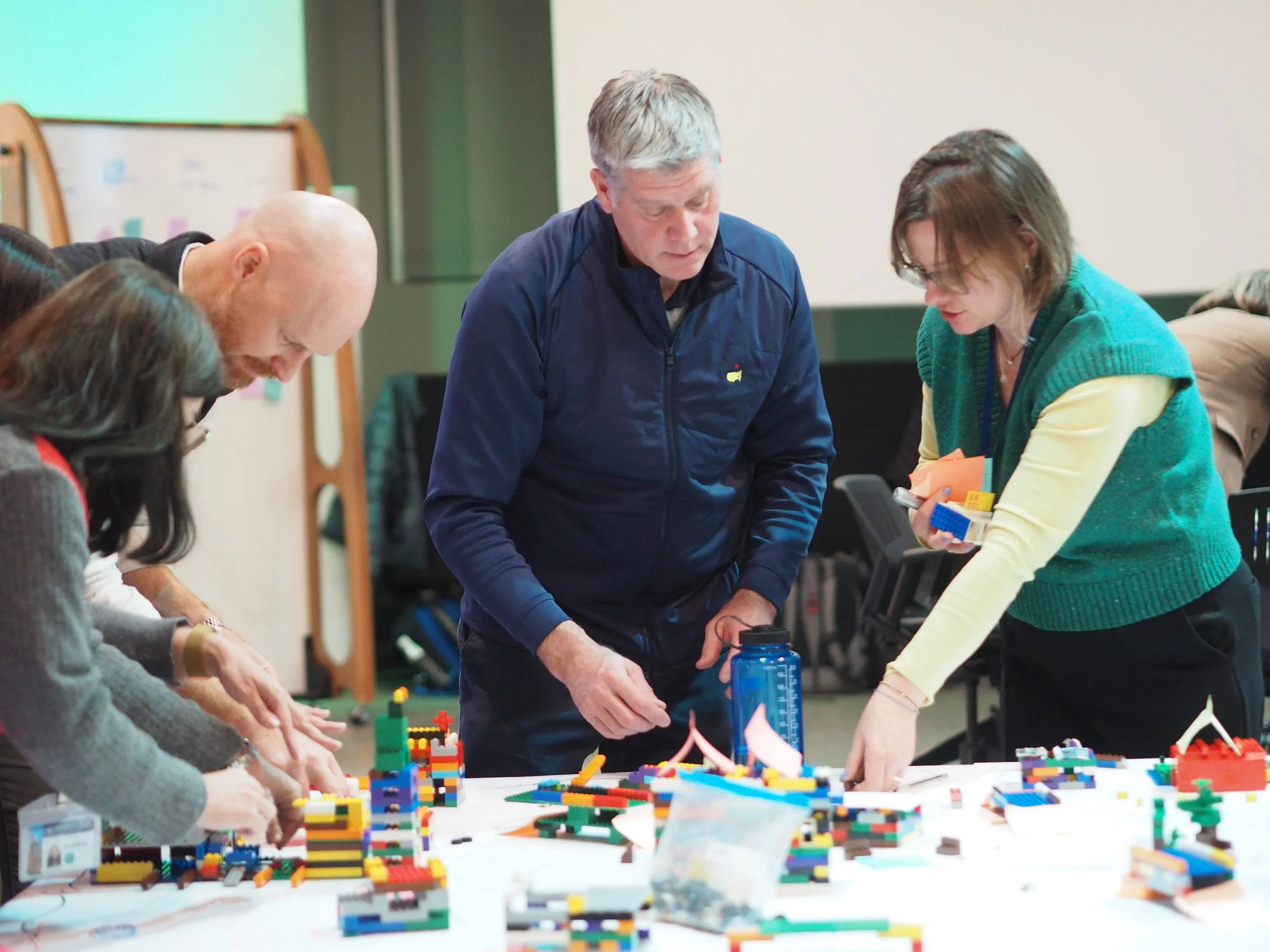
Pictured above: Head of School, Sara Primo working with legos during a leadership workshop while attending the Klingenstein Fellowship in January.
by Sara Primo, Head of School
In January, I joined 18 fellow heads of school for a two-week fellowship at the Klingenstein Center at Columbia University. This had been highly recommended by friend and mentor Julia de la Torre, Head of Moorestown Friends School.
One idea that was core to the program was creativity in leadership. The executive director and our main professor, Nicole Furlonge, was a former English teacher as am I. We read an excerpt of her book, Race Sounds: the Art of Listening in African American Literature as preparation for her coursework with us, on Listening Leadership. Her use of metaphor and enriching literary examples felt like a homecoming of sorts. I learned much more about myself as a leader and a presence through a leadership profile analysis, which elevated each of our strengths and what these mean for areas of growth and areas of needed support. I found this session enlightening, encouraging, and motivating.
At the end of our first week, we were led in an activity in which we remembered our most impactful teacher, and compared our experiences to look for a core educator identity. For me, it was Mr. Crock who taught 9th and 10th grade English – a teacher who recognized students for who they are, helped us map our thinking, revered our ideas, was deeply passionate, and full of contagious wonder. This discussion channeled us from “who are teachers?” into a deeper discussion of “what is teaching?” We designed a collective portrait of a teacher as the backdrop for the questions: Given this portrait, what and how is school? What and how is the professional community at school?
Much of the richest learning happened beyond the classroom, while in motion. I walked from 77th Street up to 120th Street each morning with peers, went out to dinner with these new friends, and provided a listening ear to other heads in the lobby of the hotel past closing time at the hotel cafe. I filled an entire notebook during this two-week experience, and when I look back at these notes: much of them came directly from my colleagues. Our final project presentations were a particular highlight of the program for me; seeing the forward-looking ways we all had begun to digest our time together.
My final project was a page-a-day calendar for the month of March that shared a reflective query to sit with each morning. Sample queries have been: What does it mean for a school to be a good listener? In what ways can I make my thinking and judgment more visible to the board? To the faculty? What moves me from reactivity to creativity? What is my subtractive practice? After Klingenstein, I am thinking differently about the mind, about learning, about listening, about managing a team, about change, and about reflective leadership.